In 2026, the real estate landscape has shifted dramatically. With 96% of homebuyers starting their search online and 67% now using AI tools as their primary research method, traditional real estate marketing tactics are losing their edge [1] [2]. For real estate agents and brokerages, generic content and paid ads are no longer enough to secure a steady stream of qualified leads. The new frontier is Search Engine Optimization (SEO) combined with Answer Engine Optimization (AEO), a strategy designed to capture high-intent buyers and sellers exactly when they are looking for answers. Partnering with an expert agency like SEOfly can accelerate this transition.
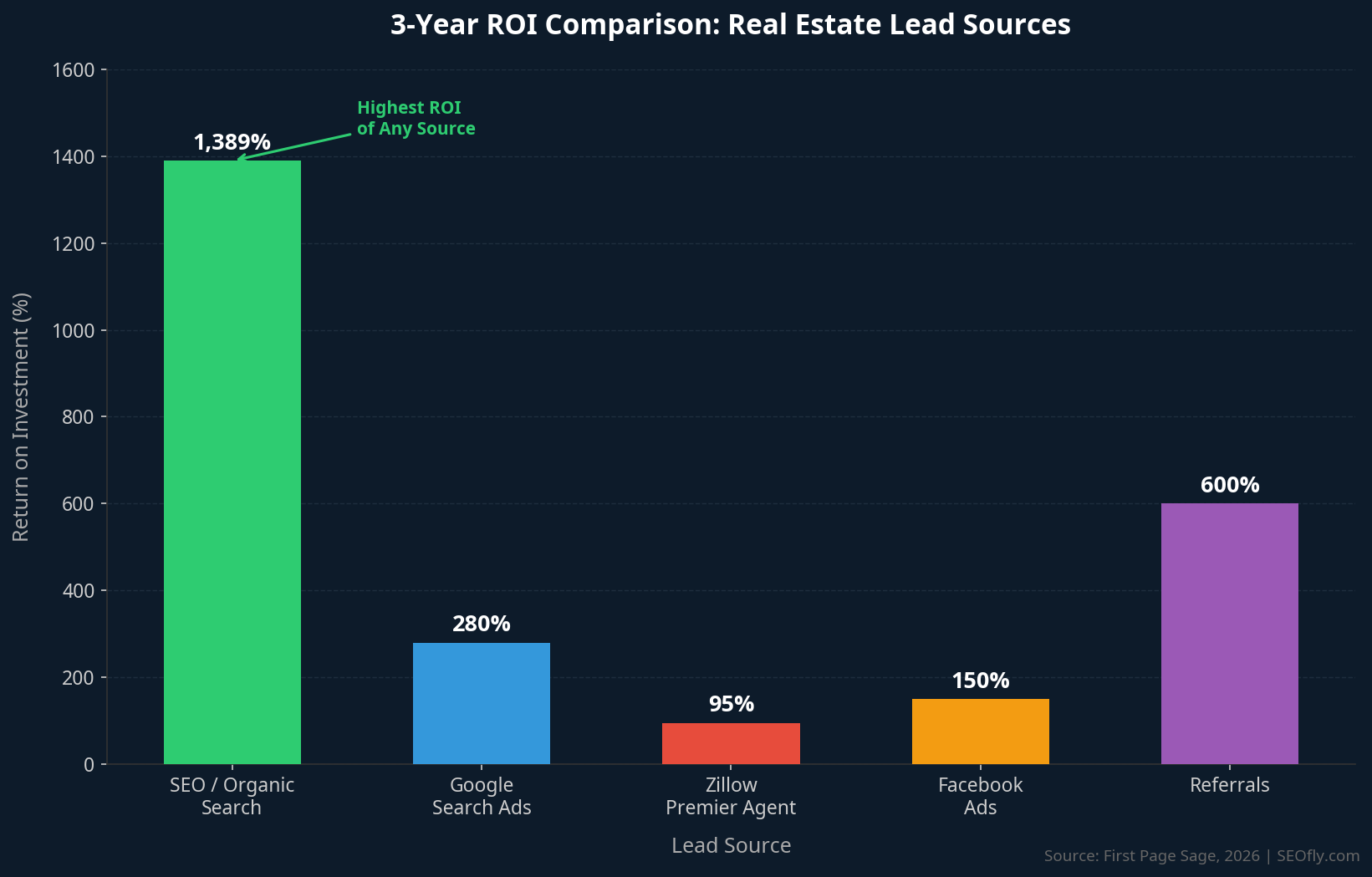
This comprehensive guide breaks down the essential strategies real estate professionals need to adopt in 2026. From optimizing your Google Business Profile to building neighborhood hubs and leveraging AI search signals, such as those discussed in our End of SEO? Why April 2026 Is the Inflection Point for Answer Engine Optimization guide, we will explore how top-performing agents are generating a 1,389% ROI from organic search [3].
Why Are Agents Shifting to SEO in 2026?
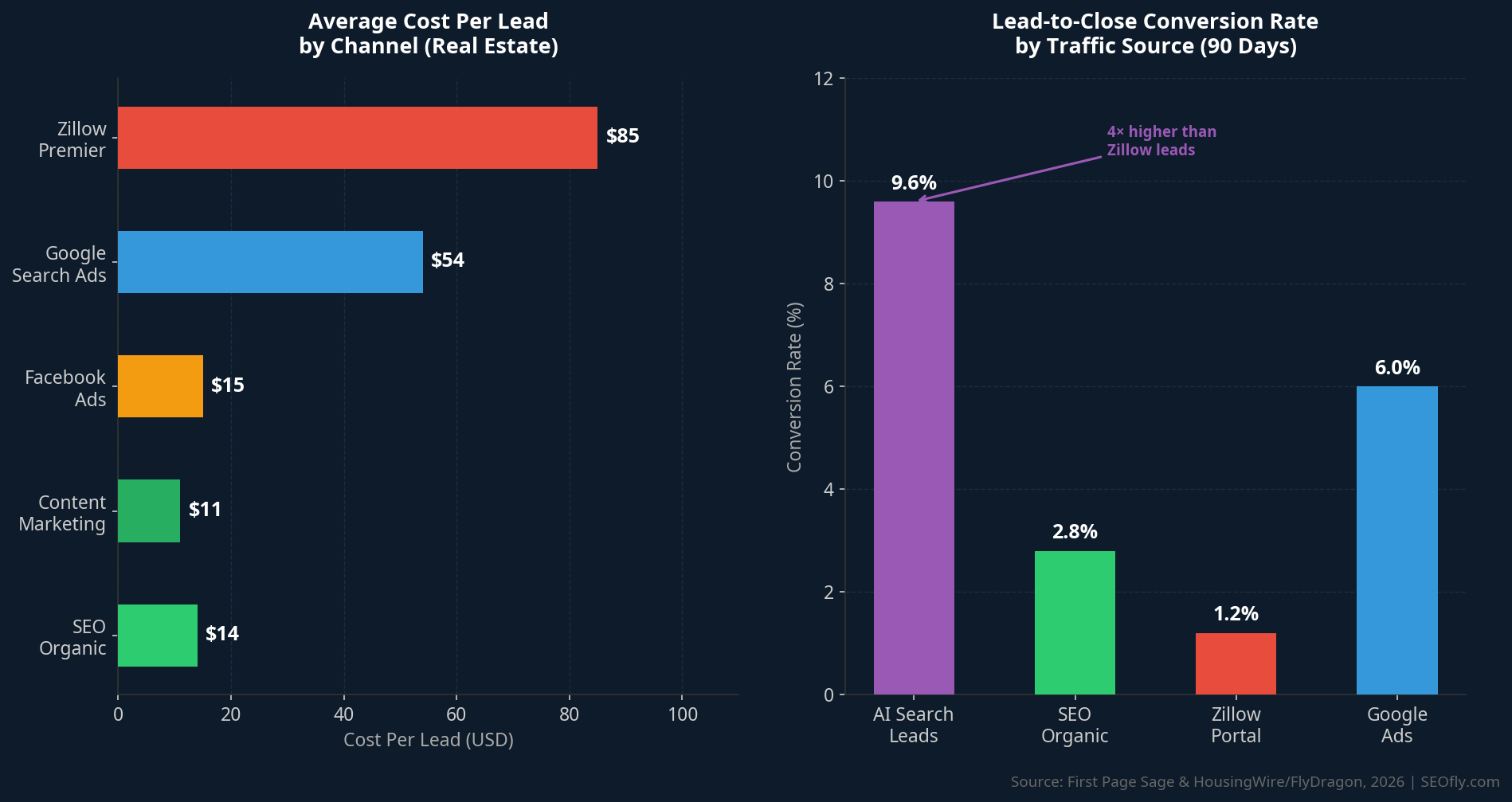
The reliance on portals like Zillow and Realtor.com is waning as their agent-discovery traffic has seen significant declines [2]. Meanwhile, the cost per lead (CPL) for paid channels continues to climb, with real estate ranking as one of the most expensive industries for lead acquisition. The blended industry average CPL is $448, and Google Search Ads can cost between $42 and $66 per lead [4].
In contrast, organic search offers a sustainable and highly profitable alternative. A mature content marketing and SEO strategy can bring the cost per lead down to $7–$15, delivering a median ROI of nearly 1,400% [3] [4]. This approach is not unique to real estate; similar strategies are driving growth across sectors, from home remodeling to plastic surgeons. Furthermore, leads generated through organic search have a higher conversion rate, with AI-sourced leads closing at 9.6% within 90 days, compared to just 2.4% for traditional portals [2].
Direct Answer: Agents are shifting to SEO in 2026 because it offers a significantly lower cost per lead ($7–$15) and a much higher ROI (1,389%) compared to paid advertising, while also capturing the growing segment of buyers using AI search tools that convert at higher rates.
Want to see how your real estate website performs?
Get a comprehensive analysis of your local search visibility and AI readiness.
Claim Your Free SEO AuditHow Does Local SEO Drive Real Estate Leads?
Real estate is inherently a local business. A buyer looking for a condo in Miami is not interested in listings in Orlando. Local SEO ensures that your business appears in geographically relevant searches, connecting you with clients in your specific market.
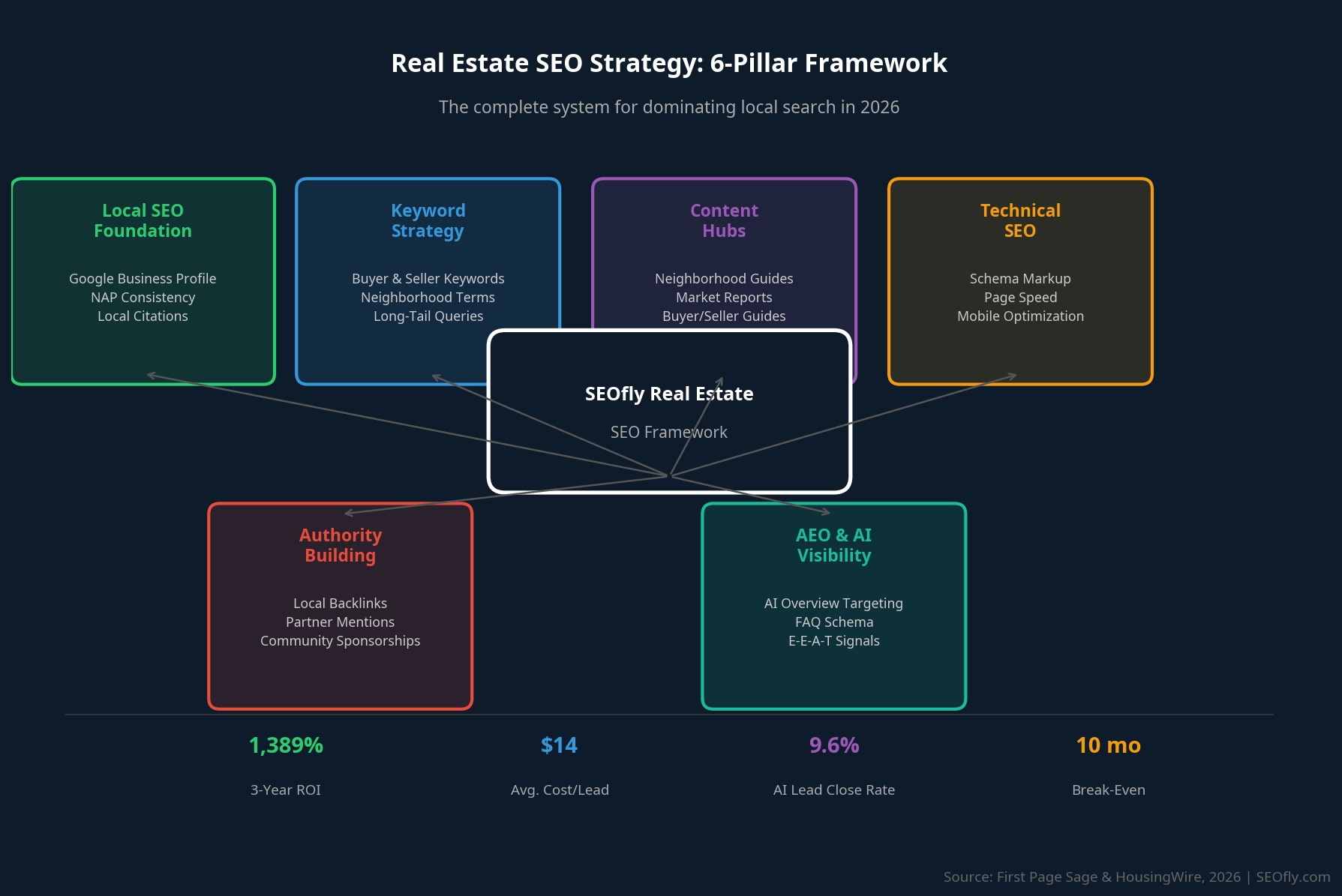
The cornerstone of local SEO is the Google Business Profile (GBP). As we've detailed in our SEO Tampa FL: 2026 Local Growth Guide, local authority is paramount. Optimizing your GBP involves claiming your profile, selecting the precise business category (e.g., "Real Estate Agency"), and maintaining consistent Name, Address, and Phone Number (NAP) information across all online directories [5].
Reviews are another critical component. Google rewards businesses with frequent, high-quality reviews by boosting their visibility in the Local Map Pack. Moreover, 72% of sellers only interview one agent before listing, and 35% cite reputation as the most important factor in their decision [4]. Actively soliciting and responding to reviews builds the trust necessary to win these listings.
Direct Answer: Local SEO drives leads by optimizing your Google Business Profile and local citations to ensure your agency appears in the Local Map Pack for geographically specific searches, capturing high-intent buyers and sellers in your immediate market.
What Content Strategy Works for Real Estate in 2026?
A robust content strategy is the engine that powers real estate SEO. The goal is to create content that answers the specific questions your potential clients are asking. This involves targeting both buyer and seller keywords, as well as creating hyper-local resources.
Neighborhood Guides and Hubs
The single most effective content strategy for real estate agents is the creation of comprehensive neighborhood guides [5]. These pages should serve as the ultimate resource for a specific area, detailing school districts, local amenities, market trends, and active property listings via IDX integration.
By building dedicated pages for each neighborhood or city you serve, you capture long-tail, high-intent searches such as "homes for sale in [Neighborhood]" or "living in [Neighborhood] pros and cons." These pages not only rank well but also establish you as the definitive local expert.
Market Reports and Educational Content
Sellers are often looking for data before they list their homes. Just as financial advisors use data to build trust, real estate agents must do the same. Publishing monthly or quarterly market reports that detail average days on market, median home prices, and inventory levels can attract this audience. Additionally, educational content like "How to sell a house fast in [City]" or step-by-step home buying guides addresses informational intent and builds authority.
Direct Answer: The most effective real estate content strategy in 2026 focuses on hyper-local neighborhood guides, detailed market reports, and educational resources that answer specific buyer and seller questions, establishing the agent as a trusted local authority.
Dominate Your Local Market
Discover the exact strategies we use to rank real estate agencies on page one. Read our industry guide on Real Estate SEO.
How Do You Optimize Property Listings for Search Engines?
Every property listing on your website represents an opportunity to attract organic traffic. However, simply copying the MLS description is a missed opportunity. To optimize property listings, agents must write unique, detailed descriptions that highlight the property's features, the neighborhood context, and lifestyle benefits [5].
Technical Optimization for Listings
Beyond the text, technical elements play a crucial role:
- SEO-Friendly URLs: Use clean, descriptive URLs (e.g.,
/listings/4-bed-home-coral-gables) rather than auto-generated strings of numbers. - Image Alt Text: Ensure all high-quality images have descriptive alt text (e.g., "4-bedroom waterfront home for sale in Coral Gables with private dock") to improve accessibility and image search rankings.
- Structured Data: Implement RealEstateListing schema markup. This code helps search engines understand the content of the page, enabling rich results in the search display, which can significantly improve click-through rates [5].
Direct Answer: Optimize property listings by writing unique, detailed descriptions, using clean URLs, adding descriptive alt text to all images, and implementing structured data (schema markup) to enable rich search results.
Why is Answer Engine Optimization (AEO) Crucial Now?
With the rise of AI-powered search tools like Google's AI Overviews, ChatGPT, and Perplexity, search behavior is shifting from traditional keyword queries to conversational questions. Answer Engine Optimization (AEO) is the practice of structuring your content to provide direct, authoritative answers to these questions.
Currently, only 8.4% of U.S. real estate agents appear in AI-generated search responses [2]. To capture this emerging traffic source, agents must focus on E-E-A-T (Experience, Expertise, Authoritativeness, and Trustworthiness) signals. This means producing original data, citing credible sources, and formatting content with clear, question-based headings followed by concise answers—much like the structure of this article.
Direct Answer: AEO is crucial because 67% of homebuyers now use AI tools for research. By structuring content to directly answer conversational queries and demonstrating strong E-E-A-T signals, agents can secure visibility in AI-generated responses where competition is currently low but conversion rates are high.
Real Estate SEO ROI vs. Paid Lead Generation
When evaluating marketing investments, the numbers speak for themselves. While paid advertising can generate immediate volume, the long-term economics strongly favor SEO.
| Lead Source | Average Cost Per Lead (CPL) | Conversion Rate | Cost Per Closed Deal |
|---|---|---|---|
| SEO / Organic Search | $14 | 2.8% - 5% | $625 - $1,500 |
| Google Search Ads | $42 - $66 | 4% - 8% | ~$1,550 |
| Zillow Premier Agent | $20 - $150+ | 1% - 3% | $2,500 - $8,000+ |
| Facebook Ads | $5 - $25 | 1% - 3% | Variable (High Nurture Required) |
Data compiled from First Page Sage and Deal Machine OS 2026 Reports [3] [4].
As the table illustrates, while SEO requires an initial investment of time and resources, the compounding nature of organic traffic results in a significantly lower cost per closed deal over time.
Frequently Asked Questions
How long does it take for real estate SEO to work? Typically, a well-executed real estate SEO campaign takes 6 to 10 months to break even and start showing a positive ROI. The most significant gains in traffic and lead generation usually occur in the second or third year of consistent effort [3].
Do I need a separate website from my brokerage? Yes, having your own dedicated website is highly recommended. A personal website gives you full control over your content, local SEO strategy, and lead capture mechanisms, ensuring that the SEO equity you build belongs to you, not just your broker.
What is the most important ranking factor for local real estate SEO? The consistency and accuracy of your Name, Address, and Phone Number (NAP) across the web, combined with a fully optimized Google Business Profile and a steady stream of positive client reviews, are the most critical factors for local search visibility [5].
Should I blog about general real estate topics or just my local market? Focus primarily on your local market. Hyper-local content, such as neighborhood guides and city-specific market updates, is much easier to rank for and attracts high-intent buyers and sellers who are actually looking to transact in your area.
How often should I publish new content? Consistency is key. Publishing 2 to 4 high-quality, locally focused articles or market updates per month is generally sufficient to signal to search engines that your site is active and authoritative.
Conclusion
The real estate market in 2026 demands a smarter approach to digital marketing. Relying solely on expensive portal leads or broad social media campaigns is no longer sustainable. By investing in a comprehensive SEO and AEO strategy—focusing on local authority, hyper-local content, and technical optimization—real estate professionals can build a compounding asset that consistently delivers high-quality leads.
The shift toward AI search and the increasing importance of organic visibility represent a massive opportunity for agents willing to adapt. The time to optimize your digital presence is now.
Stop Losing Leads to Your Competitors
The AI search revolution is happening now. Don't get left behind. Contact SEOfly today for a custom strategy session and start dominating your local market.
Get Your Custom SEO StrategyReferences
[1] National Association of Realtors. (2025). Profile of Home Buyers and Sellers. [2] HousingWire / FlyDragon. (2026). State of AI SEO in Real Estate 2026. [3] First Page Sage. (2025). SEO ROI Statistics 2026. [4] Deal Machine OS. (2026). 75+ Real Estate Lead Generation & Marketing Statistics (2026). [5] Houzez. (2026). SEO for Real Estate Agents: The Complete 2026 Guide.
Advanced Tactics: Leveraging Video and Social Signals for SEO
While text-based content and technical optimization form the foundation of real estate SEO, integrating multimedia elements can significantly amplify your results. In 2026, search engines are increasingly prioritizing diverse content formats, and video has emerged as a critical component of a comprehensive SEO strategy.
The Power of Video in Real Estate Search
Video content naturally keeps visitors on your website longer, which sends a strong positive signal to search engines regarding user engagement. When potential buyers watch a property tour or a neighborhood walkthrough, their "dwell time" increases, reducing bounce rates and indirectly boosting your page rankings.
Furthermore, YouTube—owned by Google—is the second largest search engine in the world. By creating optimized video content, you open up an entirely new channel for discovery. Agents should consider creating:
- Neighborhood Spotlight Videos: Embed these within your written neighborhood guides to provide a richer, multi-sensory experience.
- Market Update Summaries: A quick 2-minute video breaking down the monthly market report can appeal to users who prefer watching over reading.
- Client Testimonial Interviews: Video testimonials carry immense weight for E-E-A-T (Experience, Expertise, Authoritativeness, and Trustworthiness), demonstrating real-world success and building immediate trust with prospective clients.
When uploading videos, ensure you use keyword-rich titles, detailed descriptions, and accurate tags. Most importantly, always embed these videos directly onto your relevant website pages to consolidate the SEO benefits.
Integrating Social Signals
While social media shares do not directly impact Google rankings, the indirect benefits are substantial. Content that performs well on social platforms generates more visibility, which can lead to increased organic searches for your brand name and more natural backlinks from other websites.
To maximize this synergy:
- Share snippets of your market reports and neighborhood guides across your social channels, driving traffic back to the full articles on your website.
- Use platforms like Pinterest and Instagram to showcase the visual appeal of your listings, always ensuring your profile links back to your optimized property pages.
- Engage with local community groups on Facebook or Nextdoor, sharing your educational content when it genuinely answers community questions.
By creating an ecosystem where your social media efforts feed into your SEO strategy, you build a resilient, multi-channel digital presence that captures leads at every stage of the buying or selling journey.
Building Authority Through Strategic Backlinking
In the highly competitive real estate market, having great content is only half the battle. Much like the strategies required for personal injury attorneys or HVAC & roofing contractors, building authority is essential. Search engines also evaluate the authority of your website based on the quality and quantity of external sites linking back to yours. These "backlinks" act as votes of confidence.
Earning High-Quality Local Links
For real estate agents, local backlinks are far more valuable than generic links from unrelated sites. Strategies to earn these local links include:
- Sponsoring Local Events: Many community events, youth sports teams, and local charities will list sponsors on their websites with a link back to your site.
- Partnering with Local Businesses: Create a "Local Favorites" guide on your website featuring top restaurants, contractors, and shops. Reach out to these businesses to let them know they've been featured; they will often link back to your guide from their own sites.
- Guest Posting on Local Blogs: Offer to write a real estate market update for a local news outlet or community blog in exchange for a link back to your website.
Building a strong backlink profile requires time and relationship-building, but it is one of the most effective ways to separate your website from the competition and achieve long-term dominance in local search results.